With Berkshire Hathaway's acquisition of Heinz, the deal making environment looks like it is starting to do more than bubble up. Over the last month, Liberty Global has purchased Virgin Media, Oracle bought Acme Packet, and Dell is looking to take itself private. The current environment has interest rates at rock bottom so financing is incredibly cheap. Public companies have record levels of cash on their balance sheets, and investors are starting to put pressure on management teams to either return the capital or do something productive with it. From the perspective of a shareholder or investor, if a company is sitting on high cash levels and earning nothing on it, you have an unproductive asset. If the cash is held for long periods of time, investor's also lose because of the missed opportunity of using the cash on other potentially more productive assets. If you combine these factors with the fact that many large companies also have very productive cash generating businesses which can be used to pay off potential loans, if this is not a great situation for deal making, when would it be? Moreover, management groups also have a fiduciary responsibility to shareholders to try to increase shareholder value. One way is by purchasing other enterprises which can help their existing businesses. It could very well be we see a lot more activity in the merger and acquisition front over the next year.
Facebook has built a large business and could see many years of growth in front of it. It currently has about $10 billion dollars of cash on the balance sheet, and no debt. It currently made public it will probably pay zero tax to the federal government in 2012. Our president publicly has stated the government should look at closing loopholes many big businesses use to avoid paying their tax obligations. Not only that, specific industries, especially energy, are chastised because they receive tax breaks when they are clearly large and profitable and don't need that preferred status. I think if you are going to be considered even-handed, the government should refrain from criticizing one industry for using tax laws to their advantage, and then ignore others, like those in high-tech, for doing exactly the same thing.
I don't know how many of you have been paying attention to the Tesla Motor controversy with the NY Times. If you have not, it is pretty straightforward. A reporter from the NY Times who owned a Tesla automobile tried to go on a 200 mile trip on the east coast during cold weather. The vehicle he owns was bought for the bargain price of $100,000. The story documented many problems the reporter had during the trip as the car had to stop numerous times. Tesla now says the story was fake and the two organizations are trading barbs through the media. Many in the press have written about how wonderful these electric cars are from Tesla. I have read some investors opinions on how they believe Tesla is a transformational type company. The practical aspect of the idea of electric cars as a mainstream alternative looks more and more questionable, to say the least. People are not going to pay elevated prices for a car which is not close to being functional at all times and in all-weather types. You could also take this a step further and very much question the idea of alternative energy sources being a practical alternative to traditional carbon based solutions. You better believe you will see more and more questions about this issue in the months ahead.
Here is a nice summary of the merger and acquisition situationhttp://www.cnbc.com/id/100461022
If you want more details about the Facebook tax controversy, maybe take a look
http://www.businessweek.com/articles/2013-02-15/facebook-gets-a-multi-billion-dollar-tax-break#r=rss
Native applications are all the rage- here is an analysis of the emerging industry-http://techcrunch.com/2013/02/17/the-native-ad-movement-and-the-opportunity-for-web-publishers/
Gold and silver prices had a very tough week, but I wouldn't count them out- here is one writer's thought-
http://seekingalpha.com/article/1199661-it-s-gut-check-time-for-gold-and-silver
I hope all of you are having a great weekend and thank you for reading the blog.
Y H & C Investments, Yale Bock, and the family of Yale Bock own positions in securities mentioned in the blog post. Investing in stocks can lead to the complete loss of your capital
. As always, on any company mentioned here, past performance is not a guarantee of future returns. Investing involves risk of losses on invested capital. One should research any investment and make sure it is suitable with your objectives, risk tolerance, risk profile liquidity considerations, tax situation, and anything else pertinent to your financial situation. Also, the CFA credential in no way implies investment returns will be superior for any charter holder.
Sunday, February 17, 2013


Friday, February 8, 2013
TINA, Technology, and Justice-
It is starting to get a whole lot more interesting in the capital markets. You see, the talk of a great migration out of bonds and into stocks is starting to get institutions and some retail investors a bit nervous, or excited, depending on your positions. One of the web sites I started reading is thereformedbroker.com, written by ex-broker Josh Brown. In one of his daily links, a trader came up with the acronym which I think is very appropriate TINA. What does TINA refer to? TINA speaks to the asset allocation decision many investors have to now grapple with of staying in cash, bonds, or cd's and getting potentially beat up by inflation or rising interest rates, or moving a greater percentage of capital to stocks? As the 10-year treasury bond yield hovers above or close to 2%, more and more investors are starting to believe in the TINA answer: There Is No Alternative! With the global and U.S. economy potentially starting to accelerate, the question will become more and more important, especially if the expansion has arrived.
I don't think there has ever been a time for investors when technology is potentially so disrupting to established companies, and even entire industries. If you look at specific industries which might be vulnerable, certainly retail is one because of the fixed costs of rent, inventory, overhead, etc. My own opinion is a couple of others which are just as exposed would be education and government. Can you think of two other industries which operate so inefficiently and are ripe for a more effective approach? If you look at startup companies, many are focused on education, but very few related to government.
The Federal Government decided to sue Standard and Poor's for its role in rating mortgage and asset backed securities during the housing boom and bust. It is very possible they will also go after Moody's as well. The first investor who mentioned these issues was David Einhorn, of Greenlight Capital, a few years ago. Both of these stocks have fallen hard over the last week. What many people don't understand about the stock market is often times, it takes a long time for events to play out. It does not mean they will never unfold, just it takes time.
Bringing up the topic of time and the U.S. government, if the ratings agencies are fair game, what about CEO's like Jimmy Cayne of Bear Stearn's, Dick Fuld of Lehman Brothers, and Stan O' Neal of Merrill Lynch? Even five years later, These guys nearly brought down the entire financial system but not one charge has been brought against them? Justice and the sands of time....
Speaking of David Einhorn, he spoke out yesterday about the capital allocation policies of Apple by suing them because they wanted to eliminate the threat of issuing preferred stock. Capital allocation is a massive issue for companies as it gets to the heart of how they balance shareholder value and the pursuit of profitable growth. Using debt, internally generated cash, or issuing equity are all possibilities, but the art of knowing when to use the appropriate tool(s) is critical for the management of any public company.
A nice article by LinkedIn Founder Reid Hoffman about the threat to retail-
http://www.linkedin.com/today/post/article/20130208012431-1213-will-software-eliminate-physical-retail-not-quite
Google has been implementing changes to its advertising program-http://bits.blogs.nytimes.com/2013/02/08/google-changes-its-ad-program-to-try-to-solve-the-mobile-ad-riddle/?ref=business
Warren Buffett's son Howard says he is ready to take the job as if anybody could fill the man's shoes-http://www.bloomberg.com/news/2013-02-08/buffett-s-son-says-he-s-prepared-whole-life-for-berkshire-role.html
If you really don't like bankers-http://www.marketwatch.com/story/so-god-made-a-banker-2013-02-06
Thank you for reading, and I hope you have a great weekend and are happy and healthy.
Y H & C Investments, Yale Bock, and the family of Yale Bock own positions in securities mentioned in the blog post. Investing in stocks can lead to the complete loss of your capital
. As always, on any company mentioned here, past performance is not a guarantee of future returns. Investing involves risk of losses on invested capital. One should research any investment and make sure it is suitable with your objectives, risk tolerance, risk profile liquidity considerations, tax situation, and anything else pertinent to your financial situation. Also, the CFA credential in no way implies investment returns will be superior for any charter holder.
Saturday, January 26, 2013
The Market Bites Apple, Why It Is Ok to Try and Beat the Market, and Icahn vs Ackman-
We had a very interesting week in the capital markets as the big elephant in the room is clearly the poor stock performance of Apple. The stock is down nearly 40% from its high and the jump the ship analysts are running for the hills. Exxon-Mobile regained the title has the most valuable company in the world. Many investors are questioning whether Apple is the next Microsoft because the market value is so big (almost $500 billion) it will be hard for the stock to perform well. These kinds of questions are at the very heart of investing capital and require rational thinking.
You have to look at the past and the future and try to evaluate what is the most probable outcome. Will Apple's dominance suddenly be relinquished in the smart phone and tablet market? Is Samsung going to own the low end market in the emerging markets of China and India without competing products from Apple? Does Apple have the ability to create new and more innovative products which will capture the imagination of consumers on a global basis? Are there potential acquisitions Apple can make which can address product areas which are holes in their portfolio? Right now, the world is ending and the company is seen as a broken growth company. However, they just sold 50 million devices in three months and they have a cash hoard of nearly $150 billion. I should also point out if you have own one Apple in your lifetime you are very fortunate. It will probably be impossible for them to duplicate the kind of stock performance they had last 15 years. People are going to make up their minds one way or another, and it is really will be fascinating to watch how it plays out over the next one, three, and five years.
When people ask me what they should invest in now, I always like to start out by asking them what do they have expertise in? The reason why I ask that is because any time you have a knowledge advantage in specific business areas, you have an opportunity to benefit from your special background or training. Over the last few months, there were a few companies in a specific area of the market which I have a great deal of experience in. In fact, I am very confident no matter how many analysts there are on Wall Street, I am just as familiar with these industries and specific companies as they are. Consequently, when a few businesses were offered at attractive prices, or at least what I thought were good value, we spent our capital. The greatness of Warren Buffett is he emphasizes thinking for yourself and making decisions based on evaluating businesses. Many people who invest adopt the strategy of buying the same companies as other well known investors. If you are really a true practitioner of value investing using Buffett
type strategies, you find your own investments which offer compelling value. So an important point to consider is why even bother trying to beat the market?
The answer is actually very simple. When you look at investment results over a long period of time, lets say 5 years or more, the rewards an investor gets from doing better than a market index like the Dow, S&P 500, or Nasdaq by even 1% per year are incredibly large. There is a statistic from one of Buffett's annual shareholder letters which says that over 65 years, if you invested 10K and got the S&P return, your total market value would be around 950K. If you had beat the market by 10% a year, your market value would be around 95 million. So each percentage point per year is worth 9 million bucks of increased net worth. Many people say buy indexes and be happy with the market return, and in a lot of situations this is sound thinking. However, because the benefits of good performance are so large, if you can even do a little better than the market, I think the effort is certainly worth making (if you want the exact numbers I can send you the passage- just email me at information@y-hc.com)
One of the more fascinating events on Wall Street this week was the confrontation which took place on CNBC between two legendary investors, Carl Icahn and Bill Ackman. If you want to see what happened, you can watch it here-http://www.cnbc.com/id/100408608. I would just say both are great investors, and each uses their own methods very successfully. They have a long history together, and there is plenty of animosity in their relationship. If you add the Herbalife short position which Ackman is involved in, the potential for conflict is genuine and it could only get worse. The Herbalife short position is another great story which most investors will be following over the next year. The Super Bowl has nothing on the conflict between Ackman and Icahn. Personally, I think ultimately Ackman will be proved correct.
Apple is revising the way it forecasts earnings-http://go.bloomberg.com/tech-blog/2013-01-23-apple-conservative-forecast/
Retailers are making large inroads in attracting customers to their apps-http://techcrunch.com/2013/01/25/mobile-shopping-apps/
Every time I read CFO.com I get valuable insight. If you are a business person, I cannot recommend it highly enough-
http://www3.cfo.com/article/2013/1/forecasting_cash-horde-crowdfunding-big-data-obamacare-small-to-medium-sized-business-revenue-recognition-lease-accounting
Thank you for reading, and I hope you have a great weekend and are happy and healthy.
Y H & C Investments, Yale Bock, and the family of Yale Bock own positions in securities mentioned in the blog post. Investing in stocks can lead to the complete loss of your capital
. As always, on any company mentioned here, past performance is not a guarantee of future returns. Investing involves risk of losses on invested capital. One should research any investment and make sure it is suitable with your objectives, risk tolerance, risk profile liquidity considerations, tax situation, and anything else pertinent to your financial situation. Also, the CFA credential in no way implies investment returns will be superior for any charter holder.
Saturday, January 19, 2013
Earnings Season, Energy, and Startups-
It has been a while, so please indulge me as I bring to the table a nice assortment of topics. First, let's consider what is happening in the capital markets, specifically the stock market. Earnings season is upon us, and the large money center and investment banks generally have reported results which are reflective of their specific situations. The same cast of characters give us the same roles in the same movies. Should we be surprised? No, of course not.
The one area which was interesting was in the investment banking world where Morgan Stanley indicated they are looking forward to concentrating on growth. With the improvement in the housing industry, one would think the large banks focused on consumer credit, mortgage underwriting, and commercial lending would stand to prosper. Shareholders in these companies would certainly welcome better performance as the stocks have been so bad for so long any kind of return to normalized earnings power would boost the entire sector. In fact, they were so beaten down that in 2012 financials were the best performing industry in the stock market.
I just had to bring up the fact that Berkshire Hathaway is rebounding strongly and has had a big move recently. Just to show you how well Mr. Buffett has positioned Berkshire, their ownership of the Burlington Northern railroad was a great investment. Burlington now carries approximately 35% of all the oil in North America which is not moved by pipeline. With a five year backlog on railroad cars, profitability for Burlington is guaranteed for as far as the eye can see. Equity markets reward profits, and about 6 months or a year ago Berkshire's stock was languishing and the critics of Buffett were out in full force. If the energy boom is even remotely as strong as many suggest, it will be a long time before Berkshire Hathaway's stock performs poorly.

I found it interesting that Dell is now discussing a transaction which might take the company private. In the same domain, Hewlett-Packard decided to pay Meg Whitman 14 million dollars for her work last year. My own opinion is the boards of both companies are making big mistakes with these decisions. Dell faces challenges but to go private with a small premium in the hopes of coming back to the public markets in a few years is stupid. As for the board of the largest computer company in the world, maybe they think Meg has stabilized the situation. Still, if you take into consideration the mood of the public for entities like banks which pay executives big compensation packages for poor performance, it is hard to see how this is any different. With the stock at decade lows and questions about how HPQ will compete in tablets and smartphones, as well as being a second tier competitor in enterprise consulting, it would be smart of Mrs. Whitman to reconsider accepting the pay package.
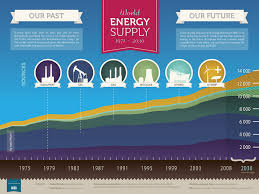
The events in Algeria again point out the importance of energy in the global marketplace. It even further underscores the increased demand of large multi national corporations for security information and services. During this week I read a report on energy trends by a large oil company. The report mentioned the increase in fuel standards (by yes, the Obama Administration) as helping improve efficiency. A few key points were straightforward:
First, there is a massive shift occurring because of the improved capability of producing oil and gas in North America. In 2012, North America produced more energy related resources than ever before, up by about 15% over 2011. Second, emerging countries in Asia are where the vast majority of demand growth in energy will take place. Countries like China and India are going to be dependant on the rest of the world for energy supplies. As much as I hate to admit it, Russia is in a very strong position with respect to energy. The issue there is how effective their companies can be in getting the resources out of ground and to the market. Just as pertinent, the sources of energy production are going to be pretty stable for a long time. Even though the current administration loves to talk about alternative energy investment, the facts indicate materials like oil, natural gas, and coal will remain dominant for a long time. A great deal of the growth in supply will come from alternative energy areas like solar, wind, and nuclear, but they only make up about 7% of total inputs. With energy, the time frames to be considered are decades, not months or years.

Recently, I have been looking into the investment merit of startup companies. My rationale for doing so is the current investment climate is one where income is being taxed at a slightly higher rate than in 2012. In any taxable account, investors will keep less of their dividend income. You might reinvest the dividends, but you will pay a higher tax on that income. One way to counteract the higher tax rate is to own companies which don't pay dividends, but use their income to buy back their own stock more aggressively. Certainly, we own plenty of companies which already do that. However, if you are faced with higher tax rates on your investment capital, why not invest in startups? A startup might be a situation which takes a long time to become a good business, but if it flourishes you stand to eventually reap the rewards. In the meantime, your capital has to go somewhere and you can choose what areas look promising and leaders you want to take a chance on. So how has it gone so far?

Having contacted a few interesting startups, I must say I think a lot of the founders have a much in common. First, they are enthusiastic about their opportunity. Many are very highly educated with impressive resumes and backgrounds. In most cases, the markets they are targeting are massive. Where the wheels come off the track is the ability to provide or communicate a business plan which shows how the company will grow and attain profitability. Many startups are looking for investors with high-profile networks who can help them reach their goals. Of course they should be discerning about who they get involved with. However, many of these individuals are not realistic about how much their companies are worth. I find venture capitalists and startup founders are completely delusional about the valuations they afford their prospects. At a time where you can find all kinds of situations in the public markets which are very interesting with respect to valuation, to go invest a ton of money on a startup would be giving up potentially great situations in seasoned companies. Perhaps in time the situation may change.
Finally, the debt ceiling negotiations will probably heat up after the inauguration and State of the Union address. It appears as if Republicans will extend the ceiling for 3 months in return for a discussion about how to reform entitlement spending. You wonder if some sense of rationality will ever prevail in Washington?
Maybe the politicians could use some help to find a way to agree?http://www.nytimes.com/2013/01/19/business/negotiation-experts-consider-how-to-reach-a-budget-deal.html?ref=business

The building blocks of our society are in databases-http://techcrunch.com/2013/01/19/your-database-is-probably-terrible/
A nice story on why the future is always bright-http://techcrunch.com/2013/01/18/the-weekly-good-the-problems-of-today-will-be-solved-by-the-minds-of-tomorrow/
Thank you for reading the blog and hopefully I will be more timely in getting my posts up. Have a happy and healthy week!
Y H & C Investments, Yale Bock, and the family of Yale Bock own positions in securities mentioned in the blog post. Investing in stocks can lead to the complete loss of your capital
. As always, on any company mentioned here, past performance is not a guarantee of future returns. Investing involves risk of losses on invested capital. One should research any investment and make sure it is suitable with your objectives, risk tolerance, risk profile liquidity considerations, tax situation, and anything else pertinent to your financial situation. Also, the CFA credential in no way implies investment returns will be superior for any charter holder.
The one area which was interesting was in the investment banking world where Morgan Stanley indicated they are looking forward to concentrating on growth. With the improvement in the housing industry, one would think the large banks focused on consumer credit, mortgage underwriting, and commercial lending would stand to prosper. Shareholders in these companies would certainly welcome better performance as the stocks have been so bad for so long any kind of return to normalized earnings power would boost the entire sector. In fact, they were so beaten down that in 2012 financials were the best performing industry in the stock market.
I just had to bring up the fact that Berkshire Hathaway is rebounding strongly and has had a big move recently. Just to show you how well Mr. Buffett has positioned Berkshire, their ownership of the Burlington Northern railroad was a great investment. Burlington now carries approximately 35% of all the oil in North America which is not moved by pipeline. With a five year backlog on railroad cars, profitability for Burlington is guaranteed for as far as the eye can see. Equity markets reward profits, and about 6 months or a year ago Berkshire's stock was languishing and the critics of Buffett were out in full force. If the energy boom is even remotely as strong as many suggest, it will be a long time before Berkshire Hathaway's stock performs poorly.
I found it interesting that Dell is now discussing a transaction which might take the company private. In the same domain, Hewlett-Packard decided to pay Meg Whitman 14 million dollars for her work last year. My own opinion is the boards of both companies are making big mistakes with these decisions. Dell faces challenges but to go private with a small premium in the hopes of coming back to the public markets in a few years is stupid. As for the board of the largest computer company in the world, maybe they think Meg has stabilized the situation. Still, if you take into consideration the mood of the public for entities like banks which pay executives big compensation packages for poor performance, it is hard to see how this is any different. With the stock at decade lows and questions about how HPQ will compete in tablets and smartphones, as well as being a second tier competitor in enterprise consulting, it would be smart of Mrs. Whitman to reconsider accepting the pay package.
The events in Algeria again point out the importance of energy in the global marketplace. It even further underscores the increased demand of large multi national corporations for security information and services. During this week I read a report on energy trends by a large oil company. The report mentioned the increase in fuel standards (by yes, the Obama Administration) as helping improve efficiency. A few key points were straightforward:
First, there is a massive shift occurring because of the improved capability of producing oil and gas in North America. In 2012, North America produced more energy related resources than ever before, up by about 15% over 2011. Second, emerging countries in Asia are where the vast majority of demand growth in energy will take place. Countries like China and India are going to be dependant on the rest of the world for energy supplies. As much as I hate to admit it, Russia is in a very strong position with respect to energy. The issue there is how effective their companies can be in getting the resources out of ground and to the market. Just as pertinent, the sources of energy production are going to be pretty stable for a long time. Even though the current administration loves to talk about alternative energy investment, the facts indicate materials like oil, natural gas, and coal will remain dominant for a long time. A great deal of the growth in supply will come from alternative energy areas like solar, wind, and nuclear, but they only make up about 7% of total inputs. With energy, the time frames to be considered are decades, not months or years.
Recently, I have been looking into the investment merit of startup companies. My rationale for doing so is the current investment climate is one where income is being taxed at a slightly higher rate than in 2012. In any taxable account, investors will keep less of their dividend income. You might reinvest the dividends, but you will pay a higher tax on that income. One way to counteract the higher tax rate is to own companies which don't pay dividends, but use their income to buy back their own stock more aggressively. Certainly, we own plenty of companies which already do that. However, if you are faced with higher tax rates on your investment capital, why not invest in startups? A startup might be a situation which takes a long time to become a good business, but if it flourishes you stand to eventually reap the rewards. In the meantime, your capital has to go somewhere and you can choose what areas look promising and leaders you want to take a chance on. So how has it gone so far?
Having contacted a few interesting startups, I must say I think a lot of the founders have a much in common. First, they are enthusiastic about their opportunity. Many are very highly educated with impressive resumes and backgrounds. In most cases, the markets they are targeting are massive. Where the wheels come off the track is the ability to provide or communicate a business plan which shows how the company will grow and attain profitability. Many startups are looking for investors with high-profile networks who can help them reach their goals. Of course they should be discerning about who they get involved with. However, many of these individuals are not realistic about how much their companies are worth. I find venture capitalists and startup founders are completely delusional about the valuations they afford their prospects. At a time where you can find all kinds of situations in the public markets which are very interesting with respect to valuation, to go invest a ton of money on a startup would be giving up potentially great situations in seasoned companies. Perhaps in time the situation may change.
Finally, the debt ceiling negotiations will probably heat up after the inauguration and State of the Union address. It appears as if Republicans will extend the ceiling for 3 months in return for a discussion about how to reform entitlement spending. You wonder if some sense of rationality will ever prevail in Washington?
Maybe the politicians could use some help to find a way to agree?http://www.nytimes.com/2013/01/19/business/negotiation-experts-consider-how-to-reach-a-budget-deal.html?ref=business
The building blocks of our society are in databases-http://techcrunch.com/2013/01/19/your-database-is-probably-terrible/
A nice story on why the future is always bright-http://techcrunch.com/2013/01/18/the-weekly-good-the-problems-of-today-will-be-solved-by-the-minds-of-tomorrow/
Thank you for reading the blog and hopefully I will be more timely in getting my posts up. Have a happy and healthy week!
Y H & C Investments, Yale Bock, and the family of Yale Bock own positions in securities mentioned in the blog post. Investing in stocks can lead to the complete loss of your capital
. As always, on any company mentioned here, past performance is not a guarantee of future returns. Investing involves risk of losses on invested capital. One should research any investment and make sure it is suitable with your objectives, risk tolerance, risk profile liquidity considerations, tax situation, and anything else pertinent to your financial situation. Also, the CFA credential in no way implies investment returns will be superior for any charter holder.
Sunday, January 6, 2013
Welcome 2013, Is Change A Comin?, the Fiscal Cliff, and More!
Happy New Year!!! 2013 is upon us and the Mayan calendar was wrong, we made it through 2012 ok. Investors even survived the fiscal cliff, and apparently all is well in the world as the stock market gained 5% last week. I don't think anyone should expect 5% weeks to be normal, but it is consistent with how the market performs. One of the best investors ever, Peter Lynch of Fidelity, always emphasized being fully invested, among other principles like doing a whole lot of homework. Lynch believed you had to be fully invested because history proved that something like 80% of all market gains occur on less than 5 days during the year. If you are trying to time the market by buying and selling, the small number of days when it roars are literally impossible to predict. If you are always fully invested, you participate in full and reap the entire benefits. Certainly, much depends on the individual circumstance and as one gets older, many should not be risking capital they need to live on. Still, the results from last week are important as there may be some big changes occurring in the capital markets.
So what exactly am I referring to? First, last week bond yields rose and the notes the Federal Reserve released showed many members of that board being inclined to start getting hawkish at the first signs of economic growth. Indeed, if the economy starts to perform better and grow quicker, employment and inflation tick up at all, the Federal Reserve will start to walk back their (low) interest rate targets. Now, the caveat is we saw this last January as well, when money poured out of the bond market and into stocks. Money also left gold and went to oil. The important question is will this continue? Earnings reports will start to roll in next week so there is quite a bit to pay attention to in the equity markets.
My two cents on the fiscal cliff deal is it is more evidence of how poor of a job our elected leaders perform. Waiting until the last minute to get deals done is awful for work product and what you get is the result. Essentially, the key issues of spending and entitlement reform were not addressed. Many corporate leaders were very disappointed in the deal. The ex-CEO of Wells Fargo, who ran a very disciplined company when he was in charge, said the country was going to hell and it was a joke that they spent months negotiating to come up with such a poor result. It is more indication we need to have term limits for Congress, not pay for their retirement packages and benefits, and elect better leaders (as President, for example- my editorial comment).
Even worse, it now sets up the end of the February and March as deadlines for a debt limit negotiation between the warring parties again. Pretty much the same bunch arguing about the same issues they have for the last 3 years. For investors, the market focuses on moving from one problem to another. Of course, it is illustrative that long term success in the stock market, like Berkshire Hathaway's recent out performance, is dependant on profits and not political events.
Costco, Sam's Club, or BJ's- I know which one I favor-http://finance.yahoo.com/news/best-warehouse-store-bj-costco-104106736.html
The new Obamacare health care law is not changing the long term trend of health care insurance costs- all they do is keep going up. There are quite a few issues to consider in health care and the following article brings many of them up-http://www.nytimes.com/2013/01/06/business/despite-new-health-law-some-see-sharp-rise-in-premiums.html?pagewanted=2&_r=0&hp
David Rosenberg is a perpetual bear on the stock markets and always talks up bonds, but you need to pay attention to all points of view so here is his 2013 outlook-http://www.businessinsider.com/david-rosenbergs-2013-outlook-2012-12

The idea of traction capital in venture capital is illustrative of the idea to wait until you have proof of concept-http://techcrunch.com/2013/01/06/iterations-traction-capital/
Y H & C Investments, Yale Bock, and the family of Yale Bock own positions in securities mentioned in the blog post. Investing in stocks can lead to the complete loss of your capital. As always, on any company mentioned here, past performance is not a guarantee of future returns. Investing involves risk of losses on invested capital. One should research any investment and make sure it is suitable with your objectives, risk tolerance, risk profile liquidity considerations, tax situation, and anything else pertinent to your financial situation. Also, the CFA credential in no way implies investment returns will be superior for any charter holder.
Saturday, December 22, 2012
Learning from History, A Calm Market?, Pokes, and 5G-
History is a great subject because it is full of all kinds of great stories, events, people, and situations which actually took place. Many of these events caused great sorrow and destruction, like World War One and Two, the murders of the Holocaust, and the massive loss of human life during the Civil War and Crusades. It is instructive to pay attention to these events because you can learn how the world came to be where it is today, and how countries and regions were shaped from previous generations.
Just as important, you can also digest how people have been successful in various different situations or industries. I think the whole process of learning encourages and stimulates growth in many different ways. There is much in the media about how college costs, especially student loans, are so great that it has renedered a generation saddled with so much debt it will be hard for them to get out from under the loan repayment burden. However, there is always another perspective. Knowledge can be gained in many ways, and growing as an individual is a never ending process. Part of the growing process is meeting and socializing with people who have different backgrounds and knowledge bases than you do. They can help you discover worlds which you may not have known existed. Most people change jobs many times during their lives. Yet, in many instances, the group you meet and become friends with in college or high school are your most cherished acquaintances and may even become part of your immediate family. Can one really put a price or value on those relationships? I think not.
As my focus usually involves the equity markets, this week I spent some time learning about some of the legends in the financial world and how they approached investing. Many are people I am very familiar with or had extensive knowledge of before this weeks quest. Still, what I found interesting about many is the mindset they had in their approach to the market and life in general. The common theme was staying optimistic, constantly learning about new companies and industries, and to not worry about broader problems in the global or domestic economy. In addition, having a healthy lifestyle and a robust social life were important as well. Many of these individuals lived very long lives, made huge fortunes, and are a shining example of good for their communities. All of these attributes are noteworthy for anybody and if I can have a smidgen of their success I will consider myself very fortunate.
In the financial world, the major events of last week included the focus on the fiscal cliff negotiations, as well as Bill Ackman's announcement and presentation of his best investment idea ever, the short of Herbalife. Herbalife's stock, as well as those of similar ilk (Avon, Nu Skin Enterprises), suffered losses of over 30% during the last two days. Yes, 30% in the last two trading sessions. Mr. Ackman has what is called market credibility. Having seen many of Mr. Ackman's presentations, he is incredibly thorough and spent a year researching Herbalife. Not all of Mr. Ackman's investments have had great success, as Border's and Target come to mind. Many are openly skeptical of how his position in J.C. Penny's will fare, and as of today, it remains to be seen how the famous department store can turn their financial performance around. However, I would not want to take the other side of the Ackman trade because he is like a dog with a bone. He will not exit the position if he feels he is right. It took him many years to take down MBIA, yet he ultimately prevailed and made a ton of money doing so. The position with Herbalife all goes to charity, so he really has no personal skin in the game. Still, it is a situation I will definitely keep my eye on.
The fiscal cliff situation remains unresolved and most analysts believe it will not get solved before 2013 arrives. During the presidential election, I commented to friend's and family the same belief I have today, only I will apply it our entire political leadership in Washington. Please take no offense at the language as it is harsh. If it is bothersome, I am sorry. THEY COULD NOT LEAD A WHORE TO BED. A major problem is neither side cares that the positions they take and will affect the other side. The President does not want to cut spending for fear it will hurt his group of constituents. John Boehner does not want to raise taxes as it is a bedrock principle of Republicans. So what do they do? They do what they do best- go on vacation, and next week they will probably give themselves a raise. Fabulous. (Sorry for the sarcasm)
Many believe market participants are way too calm given the number of problems facing the global and U.S. economy. If the answer is cash, CD's or Treasuries, I would rather be calm-
http://www.businessweek.com/articles/2012-12-19/in-a-world-full-of-risk-why-are-investors-so-calm
Don't look now, but look what is the number one free application- http://techcrunch.com/2012/12/22/its-a-facebook-and-google-world-on-apples-app-store-poke-hits-1-a-day-after-its-release/
A pretty cool article on where mobile networks are headed-
http://www.businessweek.com/articles/2012-12-19/the-future-of-mobile-networks-beyond-4g
If you are really into the tax situation, an interesting editorial commentary on the capital gains debate. I do not agree with the reasoning at all because it does not take into consideration incentives, but that is just my two cents-
http://www.bloomberg.com/news/2012-12-19/the-capital-gains-tax-a-tragedy-in-two-acts.html
Finally, I hope you have a great weekend. In addition, I hope the holiday season is a happy and healthy one for you and your family!!!!
Y H & C Investments, Yale Bock, and the family of Yale Bock own positions in securities mentioned in the blog post. Investing in stocks can lead to the complete loss of your capital
. As always, on any company mentioned here, past performance is not a guarantee of future returns. Investing involves risk of losses on invested capital. One should research any investment and make sure it is suitable with your objectives, risk tolerance, risk profile liquidity considerations, tax situation, and anything else pertinent to your financial situation. Also, the CFA credential in no way implies investment returns will be superior for any charterholder.
Sunday, December 9, 2012
Innovation and Why It Matters, Contenders vs Pretenders, a Broken Market?
One of the great things about the investment business is it constantly forces you to learn. You have to keep abreast about what is going on all over the world, and in many different industries. The longer you are a market participant, the more you experience situations where you wake up one day and something happened in the world which affected the price of one of your positions. Interestingly enough, what usually builds wealth over time is the consistency and predictability of business performance. When you see revenues and profits marching in a pretty chart that slants upward and to the right, you have found exactly what you want. However, it is not easy to find these companies, and with the advent of new technologies and innovative thinkers all over the planet, markets are the least static they have ever been.
Industries change, and sometimes very quickly, which affects individual enterprises dramatically. For example, if you look at the coal industry today, almost every analyst believes it faces huge challenges competing with natural gas, regulations which make it hard to compete, and issues about scale relative to substitutes. Coal companies have been going out of business for the last year, and still, even today, coal makes up almost 30% of all energy produced. The only constant is change, and it has a dramatic effect on how to view the investment world.
Still, nobody wants to hear about the challenges, what people are interested in is how to succeed. As a result, I believe you have to allocate capital to companies who have management teams who are leaders and not imitators. Imitation not only does not work, it is actually a very sloppy and lazy way to approach business. The risk is immense, when you do not innovate, do not push the envelope, do not think about new products or new ways to be more efficient. A company can now literally disappear in a few years. For example, look at what Apple has done to Microsoft, or what Netflix did to Blockbuster, or Amazon.com has done to Sears or Best Buy. You can also extend this to LinkedIn vs Monster.com, Facebook vs Myspace, or Apple (again) vs Sony or Nokia. So when I see Microsoft and Hewlett Packard attempting to imitate Apple with a new smartphone, I have to think in these instances, they are going to fail, and flame out miserably. Innovation can take many different forms, from new materials being uses, to new processes developed, or a new way of approaching the supply chain. Let me offer a few examples to help illustrate my point.
Having been a shareholder of Starbucks for many, many years, and hopefully for many more, I believe they are an innovative company. I also believe McDonald's is an imitative company. Yes, both have done very well for shareholder's, but if we are talking about taking chances on new products, or new acquisitions, or integrating new concepts into your business methods, it is not even a contest. Starbucks has failed with some of its innovative ideas- like the infamous Chantico (heavy chocolate drink), or an attempt at italian ices. Still, if you look at their new attempts at buying a juice company to compete in health and wellness (Evolution Fresh), or in tea (buying Teavana), or buy buying La Boulange (French Bakery) to help improve their food offerings, Starbucks is thinking, searching, striving for improvement. Some of their new store designs (more mobile for hard locations), the introduction and improvment of the Starbucks card, and the integration and investment in Square, are illustrative of using new methods to become more efficient in all areas. Pushing into new countries like India and Vietnam, show more aggressiveness about growing their business in untapped markets. On the other hand you have McDonald's, which I believes just copies what others try. You have a new smoothie, ok, McDonald's introduces a new smoothie. Got coffee? Ok, McDonald's now has that too. On Wall Street, the investment world worships both Starbucks and McDonald's, but it was not always that way. I think it will be fascinating to see how these two companies perform over the next decade. (Please know in no way am I recommending anyone invest in either or any company- see the disclosure at the end of the blog) Latte or Quarter Pounder?
A company I am not a shareholder of and made a big mistake with is Google, which I believe is as enterpreneurial as any large public business in the world. I just think they try all kinds of different ways of improving and growing their business. They were originally a search engine, and have bought Youtube, and then they purchased Motorola (among others). The development of the Android operating system may yet prove to be Apple's undoing, and certainly poses a huge threat to Microsoft as well. I just read where Google has a trial in Kansas City for fiber into the home for 70 bucks a month. Something like that could displace the telecom and cable companies if it were ever to catch fire on a large scale, maybe five to ten years out. Certainly, a few of their efforts have not paid off, which is the nature of trying new things. Typically, they do not pay off. The important question is if it does work, what is the potential benefit? Fiber in the home could be a 10-50 billion dollar business, so if Google invests $50 million and has a potential winner, they could make 100-1000 times their investment. Innovation makes it possible, whereas the copycat approach is just a way to cover the backside.
The fiscal cliff approaches and our political leadership remains wedded to idealogy. More speeches, more tv appearances, more of the same nonsense. The only guaranteed action will be to vote themselves raises and take a vacation. Forward huh?
Square is a very interesting company and will probably be an emerging leader in the payments space-http://techcrunch.com/2012/12/09/square-introduces-gift-cards-the-slow-death-of-physical-credit-cards-and-cash-continues/

Now more than ever, and increasingly so going forward, online personal data becomes a critical area of focus. Here is an interesting approach to this subject-
http://www.nytimes.com/2012/12/09/business/company-envisions-vaults-for-personal-data.html?ref=business&_r=0
Is the stock market broken? It looks like the ex-CFO of the NYSE feels it is-http://www.bloomberg.com/news/2012-12-02/stocks-markets-that-flummox-masses-do-no-one-any-good.html
I hope you had a great weekend. In addition, I hope the holiday season is a happy and healthy one for you and your family!!!!
Y H & C Investments, Yale Bock, and the family of Yale Bock own positions in securities mentioned in the blog post. Investing in stocks can lead to the complete loss of your capital. As always, on any company mentioned here, past performance is not a guarantee of future returns. Investing involves risk of losses on invested capital. One should research any investment and make sure it is suitable with your objectives, risk tolerance, risk profile liquidity considerations, tax situation, and anything else pertinent to your financial situation. Also, the CFA credential in no way implies investment returns will be superior for any charterholder.
Subscribe to:
Posts (Atom)
